Deductive Tasting Mastery
To taste is to investigate. It is an act of mindfulness where you separate the sensory input into distinct data points. A professional taster does not simply 'like' a drink; they understand it. By deconstructing a spirit into its component parts, you unlock a deeper appreciation for the craft behind the bottle.
Phase 1: The Eye (Appearance)
- Color: Tells the story of the cask (maturation). Pale straw suggests refill bourbon barrels; deep amber to ruby suggests active sherry or port casks. Mahogany indicates extreme age.
- Viscosity ('Legs'): Swirl the glass. Thick, slow-moving droplets indicate high alcohol (ABV) or high sugar content (glycerol). Fast legs suggest a lighter, younger spirit.
- Clarity: Haziness can indicate non-chill filtration (good! more flavor) or a flaw.
Phase 2: The Nose (Aromatics)
- Technique: Do not bury your nose. Hover it one inch above the rim. Keep your mouth slightly open to circulate airflow. Approach cautiously to avoid anesthetic shock from the alcohol.
- The Drive-By: Pass the glass under your nose horizontally. Note the volatility.
- Primary Notes: Look for the raw ingredients—fruit (citrus, berry, orchard), grain (cereal, corn), or vegetal (agave, grass) notes.
- Secondary Notes: Look for production notes—wood spice, vanilla, caramel, smoke (peat), or fermentation funk (esters).
Phase 3: The Palate (Taste & Texture)
- The 'Kentucky Chew': Take a small sip and actively 'chew' the spirit, moving it to all corners of your mouth for 5-10 seconds. This coats the tongue and gums.
- Entry: Is it sweet, dry, or sharp on the tip of the tongue?
- Mid-Palate: As it warms, what new flavors emerge? Does fruity turn to spicy? This is the 'development' phase.
- Texture (Mouthfeel): Is it oily, creamy, thin, or drying (tannic)?
Phase 4: The Finish
- Retronasal Olfaction: After swallowing, keep your mouth closed and breathe out forcefully through your nose. This lingering aroma is the true fingerprint of the spirit.
- Length: Count the seconds the flavor remains. A 30+ second finish indicates a spirit of exceptional quality.
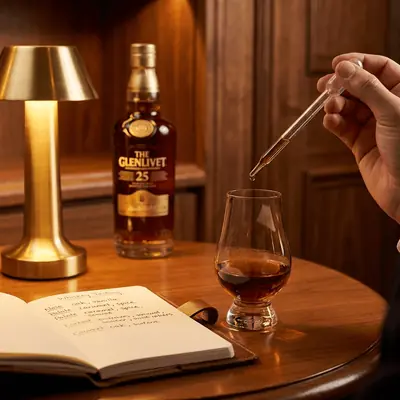
The Drop of Water
"After your first full pass, add literally one drop of room-temperature water. This disrupts the surface tension and breaks hydrophobic bonds, releasing volatile aromatic compounds that were previously trapped. It can completely transform a tight, closed spirit into a bouquet of flowers."